Enforced Disappearances
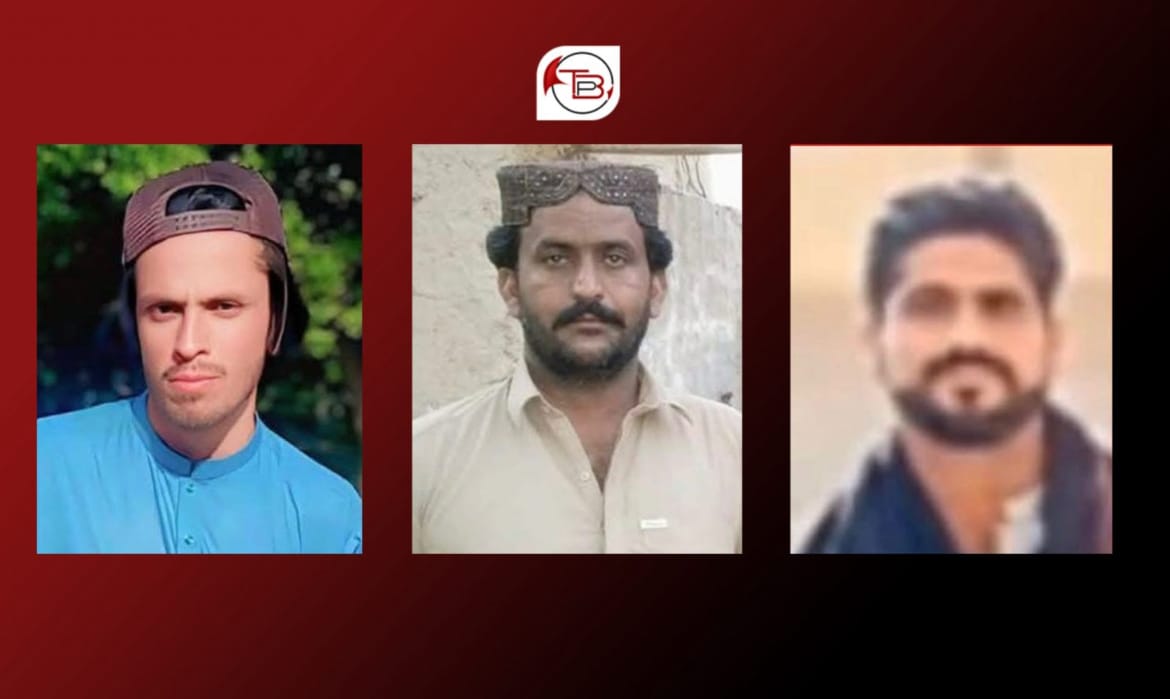
Two Young Men Reportedly Disappeared in Quetta, Balochistan
The reported disappearance of 28-year-old Majeed Shahwani and 17-year-old Abdur Razzaq in Quetta, Balochistan, raises serious concerns about arbitrary detention, enforced disappearance and the protection of fundamental human rights in Pakistan.
Background
On the evening of 26 August 2026, two young men, Majeed Shahwani and Abdur Razzaq, were reportedly detained by personnel of Pakistan’s Counter Terrorism Department (CTD) and police in Keechi Beg, Damb, in the Saryab area of Quetta, Balochistan.
Majeed Shahwani, aged 28, is identified as a labourer and the son of Ali Akbar. Abdur Razzaq, aged 17, is identified as the son of Kabir Ahmed.
According to a report published by The Balochistan Post on 1 September 2026, both young men were allegedly taken at approximately 9:00 p.m. on 26 August. The report stated that they subsequently went missing and their whereabouts remained unknown.
The Human Rights Council of Balochistan (HRCB), in its report documenting human rights violations during August 2026, published on 7 October, also recorded the incident. The report lists Majid Shahwani, aged 28, and Abdur Razzaq, aged 17, among individuals reportedly abducted on 26 August.
The two reports provide published documentation of the allegations and identify the individuals reportedly taken during the incident.
What Happened in Keechi Beg?
Available accounts indicate that Majeed Shahwani and Abdur Razzaq were taken from the Keechi Beg area of Quetta at approximately 9:00 p.m. on 26 August 2026.
According to The Balochistan Post, personnel of the Counter Terrorism Department and police were allegedly involved in their detention. However, the precise circumstances surrounding the incident, including the reasons for their reported detention and their subsequent whereabouts, remain unclear.
The HRCB report also documents the incident, identifying both individuals and recording the reported involvement of CTD and police personnel.
There are minor variations in the spelling of their names across the available reports. Majeed Shahwani is also identified as Majid Shahwani, while Abdur Razzaq’s father’s name appears as Kabir Ahmed or Kabeer Ahmed.
These differences should be considered when documenting the case and conducting further verification.
Despite the information contained in the reports, important questions remain unanswered: Where were the two young men taken? Have they been formally charged with any offence? Have their families been informed of their whereabouts? Have they been granted access to legal representation?
These questions require urgent clarification from the relevant authorities.
The Human Cost of Enforced Disappearance
Enforced disappearance has consequences that extend beyond the individuals directly affected. Families are often left facing prolonged uncertainty, fear and emotional distress, without knowing whether their loved ones are alive, where they are being held or what has happened to them.
The disappearance of Abdur Razzaq is particularly concerning because he was only 17 years old at the time of the reported incident. His age raises additional concerns about the protection of children and young people against arbitrary detention and other human rights violations.
For families of disappeared persons, the absence of information can make it difficult to seek legal assistance, establish contact with their loved ones or obtain meaningful answers from the authorities.
The reported cases of Majeed Shahwani and Abdur Razzaq highlight the importance of ensuring that anyone taken into custody is accounted for, that their families are informed, and that the legal protections guaranteed under domestic and international human rights standards are respected.
Their Whereabouts Remain Unconfirmed
The initial report published by The Balochistan Post on 1 September 2026 stated that both young men remained missing following their reported detention.
Subsequently, the Human Rights Council of Balochistan included their names in its October 2026 report documenting enforced disappearances during August.
More recently, a statement attributed to Paank continued to identify both individuals among those whose whereabouts and fate should be disclosed by Pakistani authorities.
As of 4 November 2026, no credible public report located during this research confirms that either Majeed Shahwani or Abdur Razzaq has been released or recovered.
Their current whereabouts therefore remain unconfirmed, and their cases continue to warrant attention and further investigation.
Legal and Human Rights Obligations
The reported incident raises serious concerns under Pakistan’s domestic legal framework and international human rights standards.
Article 10 of Pakistan’s Constitution provides safeguards relating to arrest and detention. These include protections concerning the grounds of arrest, access to legal representation and production before a magistrate within the constitutionally prescribed period.
Similarly, Article 9 of the International Covenant on Civil and Political Rights (ICCPR) protects the right to liberty and security of person and prohibits arbitrary arrest and detention.
The International Convention for the Protection of All Persons from Enforced Disappearance establishes international standards for preventing enforced disappearance, investigating allegations and ensuring accountability.
Pakistan is not a State Party to this Convention. Nevertheless, its provisions provide an important international framework for understanding the seriousness of enforced disappearance and the obligations that should guide efforts to prevent it.
The reported disappearance of a 17-year-old also raises concerns about the protection of children under applicable human rights standards.
The Need for Answers and Accountability
The reported disappearance of Majeed Shahwani and Abdur Razzaq requires urgent attention.
The Pakistani authorities, particularly the Counter Terrorism Department and police, should clarify the circumstances surrounding the reported detention of the two young men and disclose their whereabouts and legal status.
If they are being held in custody, their detention should be formally acknowledged, their families should be informed, and they should be granted access to legal representation and other protections guaranteed under the law.
Any allegations of unlawful detention or enforced disappearance should be investigated promptly, independently and impartially. Where violations are established, those responsible should be held accountable.
The Commission of Inquiry on Enforced Disappearances and relevant national human rights institutions should also take appropriate steps to establish the facts of the case and ensure that the families receive answers.
The families of Majeed Shahwani and Abdur Razzaq deserve to know what happened to their loved ones. Their whereabouts must be established, their rights protected, and any unlawful conduct investigated.
No individual should be held outside the protection of the law. Every person has the right to liberty, security and recognition before the law.
Sources
- The Balochistan Post. Balochistan and Sindh: Four People Reportedly Forcibly Disappeared; Four Recovered. Published 1 September 2026.
- Human Rights Council of Balochistan (HRCB). Human Rights Violations in Balochistan: 87 Enforced Disappearances and 155 Killings Reported in August 2026. Published 7 October 2026
- Constitution of Pakistan. Article 10 – Safeguards as to arrest and detention.
- International Covenant on Civil and Political Rights (ICCPR). Article 9 – Right to liberty and security of person.
- United Nations. International Convention for the Protection of All Persons from Enforced Disappearance.
Written by:
Olusola Moses Oluwadare